These statements have not been evaluated by the Food and Drug Administration. This service is not intended to diagnose, treat, cure, or prevent any disease. It is essential to consult with a qualified healthcare professional for any health concerns or before making any decisions related to your health or treatment.
Ready to try HBOT? Book your first session online.
Swelling After Liposuction: How Long It Lasts and What Helps
Liposuction
Swelling
Cosmetic Surgery
Hyperbarics
HBOT
This article is for educational purposes only and is not medical advice. OxyRenew provides hyperbaric oxygen sessions for general wellness, not to diagnose, treat, cure, or prevent any disease or condition. Hyperbaric chambers are FDA-cleared medical devices only for certain medical conditions, and OxyRenew does not provide medical treatment. Always consult a qualified healthcare professional about any health concern.
Bruising after eyelid surgery is expected and sits in the most visible place on the face. Why the lids bruise, how it usually runs, and what the one facelift study that measured bruising with HBOT found.
Facelift surgery may cause swelling and bruising in the face that can last for weeks after the procedure. Learn the recovery strategies surgeons commonly recommend and where Hyperbaric Oxygen Therapy (HBOT) fits in.
After rhinoplasty, the post-surgical swelling can be one of the most frustrating parts of the recovery process. Learn the strategies surgeons commonly recommend and the evidence behind Hyperbaric Oxygen Therapy (HBOT).
These statements have not been evaluated by the Food and Drug Administration. This service is not intended to diagnose, treat, cure, or prevent any disease. It is essential to consult with a qualified healthcare professional for any health concerns or before making any decisions related to your health or treatment.
Ready to try HBOT? Book your first session online.
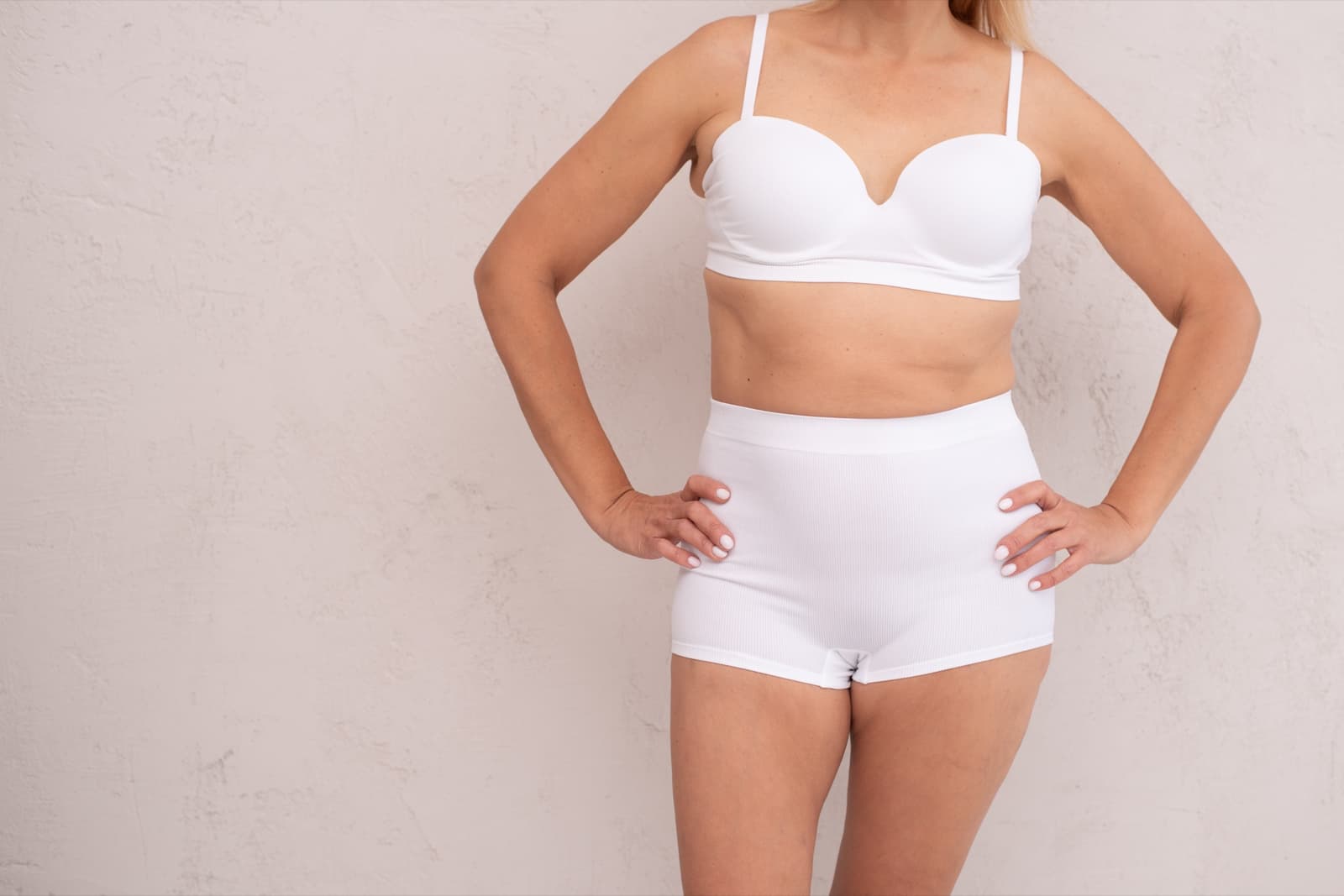
Swelling after liposuction hides the result for weeks. The contour you paid for is under fluid, bruising, and firm tissue for most of the early recovery, and it can take months to settle. This article covers why the swelling happens, how the timeline usually runs, and what the published Hyperbaric Oxygen Therapy (HBOT) cohorts in body contouring did and did not measure. No trial has measured swelling after liposuction with HBOT, and the evidence that exists is described below with its limits.
Why liposuction swells
Liposuction removes subcutaneous fat through a cannula passed repeatedly under the skin, which leaves a network of tunnels through the treated area. The StatPearls entry on liposuction describes the procedure and its typical course. Three things fill the space afterward.
Tumescent fluid: the solution infused before suctioning drains through the incisions for the first day or two and is absorbed after that.
Inflammatory fluid: the body's response to tissue injury brings fluid into the treated area, and small vessels damaged by the cannula leak blood that shows as bruising.
Disrupted drainage: the lymphatic channels that normally clear fluid from the tissue are disturbed by the cannula passes, so fluid clears more slowly than it arrives.
How the timeline usually runs
Swelling peaks in the first week or two and then recedes over the following weeks. Firm or uneven areas under the skin are common in the early months and usually soften as the tissue remodels. Most surgeons describe the final contour as visible at several months, and your surgeon's instructions on compression garments, activity, and follow-up visits govern the schedule for your case.
What the body-contouring cohorts reported
HBOT has been used after liposculpture and abdominoplasty in published patient series. None of them measured swelling. What they measured is listed below.
Aguilar et al. (2024) : a single-arm series of 296 body-contouring patients, 174 of them liposculpture, who had five daily 45-minute sessions at 2 ATA starting 24 hours after surgery. The complication rate was 10.7%, hematoma occurred in 4.72% of patients, and there were no infections or necrosis. Median return to work after liposuction was 10 days. There was no control group, and the authors state that the design could not prove HBOT was effective.
Friedman et al. (2019) : a retrospective cohort of 356 abdominoplasty patients, most of whom also had liposuction (88% of the HBOT group). Patients who completed one to three sessions before surgery had a complication rate of 8.4% versus 32.6% without HBOT. The tabulated seroma rate was 4.8% versus 9.2%, a difference that did not reach statistical significance. Patients chose their own group, so the comparison is not randomized.
Albanese et al. (2026) : a two-group comparison of 186 patients with pigmentation changes after ultrasound-assisted liposuction. Twenty sessions at 2 ATA before laser treatment produced a larger improvement than laser alone. The outcome was skin pigmentation, not swelling.
Nylander et al. (1985) : a rat experiment in which HBOT at 2.5 ATA after a period of blocked circulation significantly reduced the tissue edema that followed. This is the mechanistic basis for expecting an effect on post-surgical fluid, and it is an animal model, not a liposuction study.
A 2025 systematic review by Fisher et al. of HBOT in aesthetic surgery concluded that the evidence supporting its use is limited. Randomized trials of HBOT for chronic arm lymphedema after cancer treatment, including Gothard et al. (2010) , found no effect on limb volume, so HBOT should not be expected to speed lymphatic drainage on its own. The reason clients still consider it after liposuction is the mechanism: at 2.0 ATA, substantially more oxygen dissolves into blood plasma, and the vasoconstriction that comes with it is the proposed route to less fluid in the tissue.
Timing around liposuction
For surgical clients, a 6-session package is typically structured as one session before surgery and five as soon as possible after, sometimes the same day if your doctor allows. The liposculpture cohort above used five consecutive daily sessions starting the day after surgery. Your surgeon decides when you can start, especially while incisions are still draining and a compression garment is in place.
HBOT in Los Angeles
At OxyRenew in West Hollywood, sessions run in a private 2.0 ATA hard-shell chamber with a Certified Hyperbaric Technician monitoring from start to finish. You sit or recline during the session, and a compression garment can stay on.