These statements have not been evaluated by the Food and Drug Administration. This service is not intended to diagnose, treat, cure, or prevent any disease. It is essential to consult with a qualified healthcare professional for any health concerns or before making any decisions related to your health or treatment.
Ready to try HBOT? Book your first session online.
This article is for educational purposes only and is not medical advice. OxyRenew provides hyperbaric oxygen sessions for general wellness, not to diagnose, treat, cure, or prevent any disease or condition. Hyperbaric chambers are FDA-cleared medical devices only for certain medical conditions, and OxyRenew does not provide medical treatment. Always consult a qualified healthcare professional about any health concern.
Bryan Johnson's protocol specifies a hard-shell chamber pressurized with air, with oxygen by mask, and cautions against chambers filled with oxygen. What the two designs are, what the evidence says about fire risk, eyes, and air breaks, and what hyperbaric safety standards require.
Hyperbaric oxygen therapy and breathing oxygen from a mask, an oxygen bar, or a home concentrator differ in one variable: pressure. Learn how the oxygen your blood carries depends on pressure, why oxygen bars and mild soft-shell chambers deliver less, and where a 2.0 ATA hard-shell chamber fits.
A hyperbaric chamber is a pressurized enclosure for breathing concentrated oxygen. What ATA means, how hard-shell, soft-shell, monoplace, and multiplace chambers differ, and what a session at OxyRenew in Los Angeles looks like.
These statements have not been evaluated by the Food and Drug Administration. This service is not intended to diagnose, treat, cure, or prevent any disease. It is essential to consult with a qualified healthcare professional for any health concerns or before making any decisions related to your health or treatment.
Ready to try HBOT? Book your first session online.
As interest in Hyperbaric Oxygen Therapy (HBOT) grows in Los Angeles for wellness, longevity, and performance, a crucial question arises: are all hyperbaric chambers the same? Many people picture the traditional hospital-style chamber, a tube filled with 100% pure oxygen. While this technology is vital for specific medical emergencies, it represents an older approach with inherent risks not suitable for wellness applications.
For those seeking enhanced recovery and cognitive benefits, the environment inside the hyperbaric chamber is the most critical factor for both safety and effectiveness. At OxyRenew, we chose an air-pressurized chamber; the safety differences are explained below.
Two Goals, Two Technologies: Why Hospital and Wellness Chambers Differ
The foundational principle of all HBOT is a law of physics known as Henry's Law . It states that under increased pressure, more gas can be dissolved into a liquid. For therapy, this means vastly more oxygen dissolves directly into the blood plasma, allowing it to saturate tissues and promote healing. This universal benefit is the goal of every HBOT session.
However, the traditional hospital chamber was engineered to accomplish a second, more aggressive task needed for a single condition: decompression sickness (DCS), or "the bends." This occurs when divers ascend too quickly, causing dissolved nitrogen in their tissues to form dangerous gas bubbles. To solve this, hospital chambers are filled with 100% oxygen to create an extreme pressure gradient that forces this nitrogen out of the body, a process called "nitrogen washout."
This aggressive mechanism, while life-saving for a diver in crisis, is irrelevant for wellness applications.
Risks of a 100% Oxygen Environment
Surrounding a person with pure, pressurized oxygen creates a volatile environment. While oxygen itself is not flammable, it is a powerful oxidizer that dramatically increases the risk and intensity of fire.
Extreme Fire Hazard: In a 100% oxygen atmosphere, materials ignite at lower temperatures and burn with explosive speed. This is why strict, hospital-level safety protocols are mandatory. Patients are forbidden from bringing any personal electronics and must wear special 100% cotton garments to minimize the risk of a static spark, which could be catastrophic. These standards are outlined by the National Fire Protection Association (NFPA) 99 , which has an entire chapter dedicated to the unique dangers of hyperbaric facilities.
Ocular Side Effects: Research has consistently shown that bathing the eyes directly in high-concentration oxygen can lead to a temporary change in vision known as hyperoxic myopia (nearsightedness). A well-documented side effect , this occurs due to oxidative effects on the lens of the eye. While often reversible, it is an avoidable stress on the body.
No Air Breaks: Many oxygen-filled monoplace chambers have no air-break system, so intermittent oxygen cycling is not available in them. Cycling between oxygen and air is the basis of a proposed mechanism called the hyperoxic-hypoxic paradox, described below.
The Evolution: An Advanced Hyperbaric Chamber for Wellness
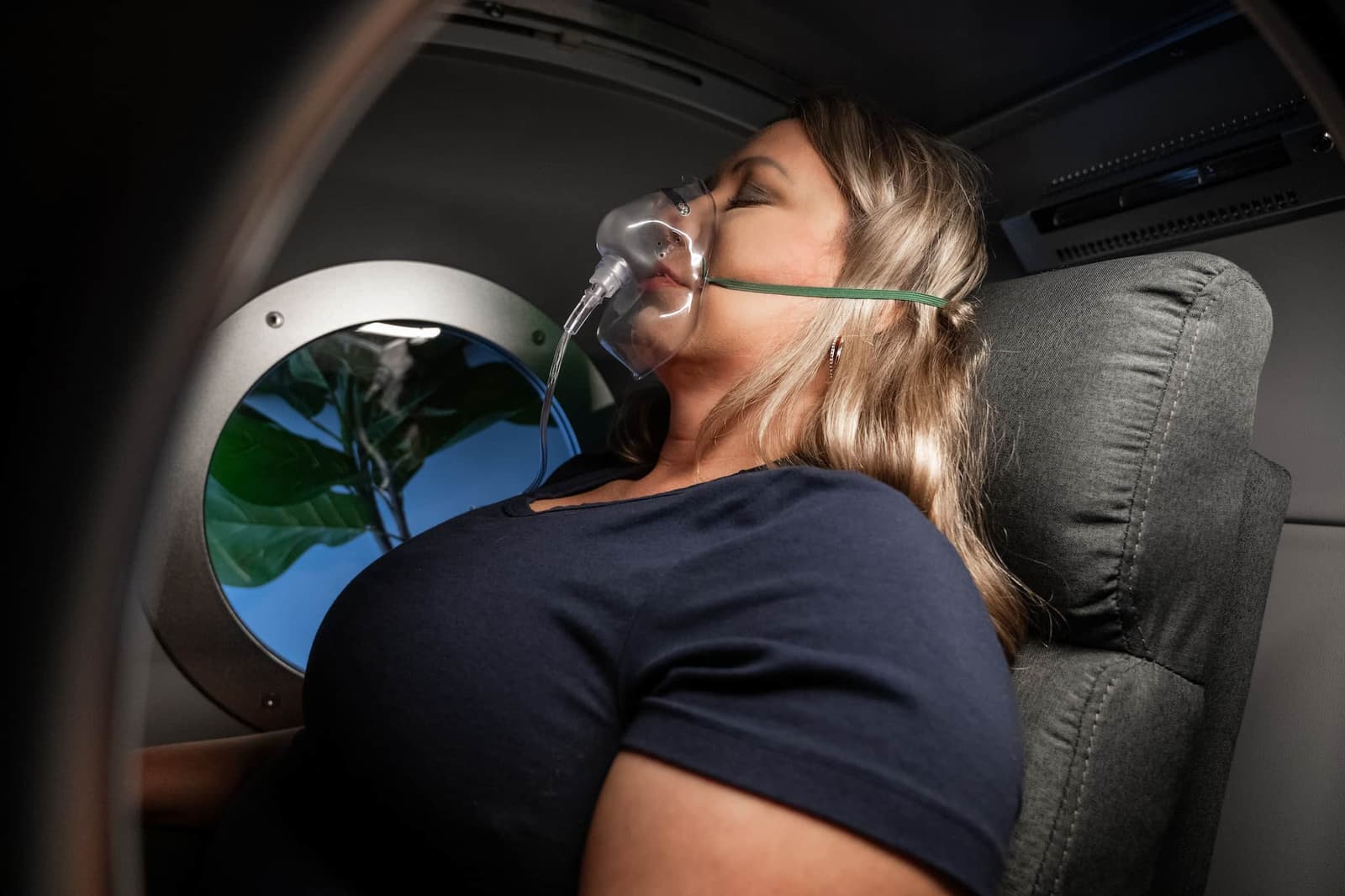
Recognizing these limitations, a new generation of hyperbaric chamber was developed specifically for wellness and recovery. At OxyRenew, our hard-shell chamber is pressurized with filtered air, not pure oxygen. Concentrated oxygen is then delivered to you directly and safely through a mask or nasal cannula. This fundamental design difference creates a vastly safer and more comfortable experience.
With an air-filled chamber, the fire risk is significantly mitigated. This allows you to bring personal electronics like a phone, tablet, or laptop into the chamber safely. You can work, watch a movie, or simply relax in comfort, which makes it easier to keep to a consistent session schedule.
What an Air-Pressurized Chamber Allows
An air-pressurized chamber allows session structures that need an air-break system, in addition to the safety differences above.
The Hyperoxic-Hypoxic Paradox: The session alternates between breathing concentrated oxygen (via the mask) and the filtered air inside the chamber. Hadanny and Efrati (2020) call this the hyperoxic-hypoxic paradox. The authors propose that intermittent hyperoxia may trigger repair signaling, including stem cell release and new blood vessel growth; this is a hypothesis under study.
Protecting Your Vision: Because the chamber is filled with air, your eyes are not directly exposed to high concentrations of oxygen. This significantly mitigates the risk of developing the hyperoxic myopia associated with hospital-style chambers.
Comfort and Privacy: Our private, sit-down chamber provides a calm, controlled setting where our Certified Hyperbaric Technician can focus entirely on you, ensuring your protocol is delivered with precision.
Choosing a Chamber in Los Angeles
The choice of a hyperbaric chamber should be a deliberate one, based on your specific goals. While 100% oxygen-filled chambers have a role in emergency medicine, they were built for hospital indications, not wellness sessions.
OxyRenew invested in a modern, air-pressurized hyperbaric chamber for the safety reasons above.