These statements have not been evaluated by the Food and Drug Administration. This service is not intended to diagnose, treat, cure, or prevent any disease. It is essential to consult with a qualified healthcare professional for any health concerns or before making any decisions related to your health or treatment.
Ready to try HBOT? Book your first session online.
Capsular Contracture After Breast Augmentation: Causes and Prevention
Breast Augmentation
Cosmetic Surgery
Recovery
Hyperbarics
HBOT
This article is for educational purposes only and is not medical advice. OxyRenew provides hyperbaric oxygen sessions for general wellness, not to diagnose, treat, cure, or prevent any disease or condition. Hyperbaric chambers are FDA-cleared medical devices only for certain medical conditions, and OxyRenew does not provide medical treatment. Always consult a qualified healthcare professional about any health concern.
The scar is the permanent part of an elective procedure. How a scar forms, what shapes the outcome, and what the HBOT evidence shows in problem scars and in one small study of ordinary incisions.
Swelling after liposuction hides the result for weeks and can take months to settle. What causes it, how the timeline runs, and what the published HBOT cohorts in body contouring did and did not measure.
A mommy makeover is two recoveries at once. What the abdominal and breast sides involve, how the timeline usually runs, and what the abdominoplasty and aesthetic surgery cohorts reported about HBOT.
These statements have not been evaluated by the Food and Drug Administration. This service is not intended to diagnose, treat, cure, or prevent any disease. It is essential to consult with a qualified healthcare professional for any health concerns or before making any decisions related to your health or treatment.
Ready to try HBOT? Book your first session online.
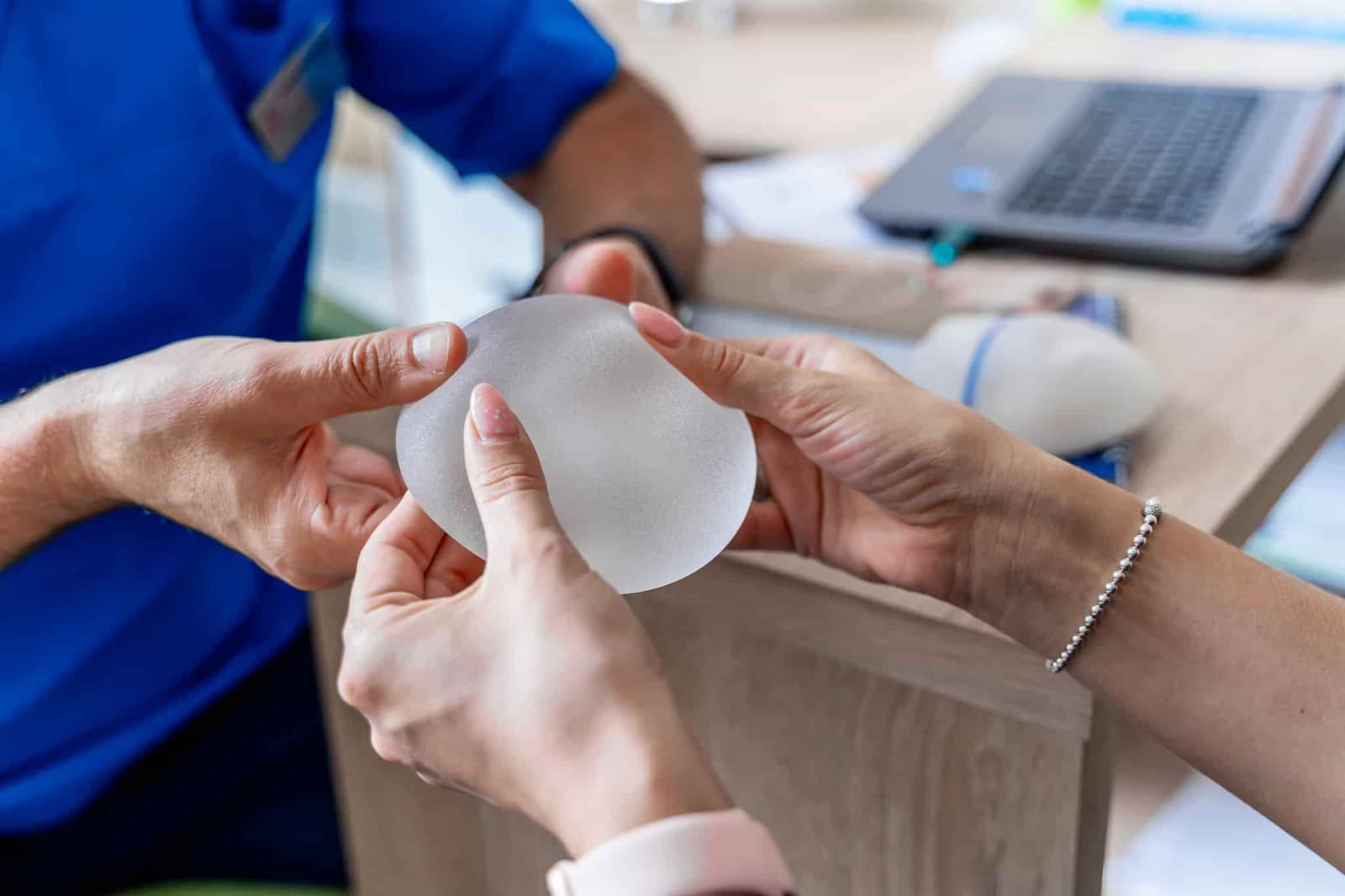
Capsular contracture is one of the most common long-term concerns following breast augmentation. It is the gradual hardening, tightening, or distortion of the breast as the body forms scar tissue around the implant. It can appear months or even years after surgery, and it is the single most frequent reason patients return for revision procedures.
Capsular contracture is largely a problem of how tissue heals around the implant, and healing is a process that can be actively supported. Below we cover what capsular contracture is, why it happens, and the surgical and adjunct strategies, including Hyperbaric Oxygen Therapy (HBOT), being studied for risk reduction.
The FDA has cleared HBOT for a specific list of conditions, and capsular contracture prevention is not one of them. Its use around cosmetic breast augmentation is off-label. The sections below summarize published research, not treatment guidance.
What is capsular contracture?
Whenever the body receives an implant, it responds by forming a thin layer of collagen around the foreign object. This layer, called the capsule, is normal and expected. In most patients it stays soft, pliable, and invisible. Capsular contracture occurs when that capsule thickens, tightens, and contracts around the implant, squeezing it into a firmer, often distorted shape.
Surgeons grade severity using the Baker classification: Grade I and II capsules are soft and rarely noticeable, while Grade III and IV capsules are visibly distorted and frequently painful. Reported rates vary, but most large series place the long-term incidence somewhere between 5% and 15% of primary breast augmentations, with higher rates following revision surgery or radiation.
The underlying driver is a sustained inflammatory and fibrotic response. Anything that prolongs inflammation around the implant (bacterial biofilm contamination, post-operative hematoma, ischemic tissue, or radiation injury) pushes the capsule toward thickening and contraction. Healthy, well-perfused, low-inflammation tissue tends to form a thin, soft capsule. Hypoxic, inflamed, or contaminated tissue does the opposite. Every preventive strategy below aims to keep the tissue around the implant oxygenated, low-inflammation, and free of bacterial load.
Approaches that may reduce the risk
Surgical Technique and Pocket Hygiene: The single largest determinant of long-term capsule quality is the operation itself. Submuscular or dual-plane placement, meticulous hemostasis, antibiotic pocket irrigation (commonly the triple-antibiotic "Adams cocktail"), nipple shields, and no-touch insertion using a Keller funnel have all been shown to reduce contracture rates. When choosing a surgeon, ask specifically about pocket irrigation protocol and insertion technique. These details matter more than the brand of implant.
Strict Post-Operative Care: Hematoma and seroma both significantly raise contracture risk by prolonging inflammation around the implant. That makes the first few weeks critical: avoid strenuous upper-body activity, wear the surgical bra as instructed, attend every follow-up, and report any asymmetric swelling, warmth, or pain immediately. Implant displacement exercises (where appropriate for the implant type) are commonly recommended to help keep the pocket open during early healing.
Hyperbaric Oxygen Therapy (HBOT): HBOT involves breathing oxygen-enriched air in a pressurized chamber, typically at 2.0 atmospheres absolute (ATA). At that pressure, oxygen dissolves directly into the bloodstream at far higher concentrations than normal breathing allows, saturating tissues that would otherwise be poorly perfused. For patients concerned about capsular contracture, this matters because the capsule's behavior is dictated by the local healing environment around the implant, and oxygen is the rate-limiting input for nearly every step of healthy, low-inflammation tissue repair.
HBOT and the science of capsule formation
Researchers hypothesize that HBOT acts on several of the mechanisms behind capsular contracture. Raising tissue oxygen is proposed to suppress the chronic inflammatory signaling (including TGF-β-mediated pathways) that pushes fibroblasts to lay down the dense, contractile collagen seen in pathologic capsules. HBOT is also proposed to stimulate angiogenesis, the formation of new capillaries, which would improve perfusion of the soft tissue around the implant. That surrounding tissue determines whether a capsule stays soft or hardens.
An experimental study by Yarar et al. (2020) tested HBOT in a rat model of silicone breast implant placement, giving animals daily 90-minute sessions at 2.5 ATA for 15 days after implantation. In that rat model, the HBOT groups showed statistically significantly lower mean capsule thickness than controls, alongside lower fibroblast, neutrophil, and macrophage counts. The authors concluded that HBOT may serve as an adjuvant treatment to decrease capsule contraction after silicone implant placement.
Radiation soft-tissue injury is treated with HBOT in medical settings. That is physician-directed care, not what OxyRenew provides. Radiated tissue is chronically hypoxic. A preliminary retrospective comparative study by Scampa et al. (2024) examined perioperative HBOT in irradiated patients undergoing microvascular autologous breast reconstruction. Although the cohort was small (14 patients) and findings did not reach statistical significance, the HBOT group showed shorter mean ischaemia times per flap, supporting the case for further prospective study in this population.
For non-irradiated cosmetic augmentation patients, HBOT for capsular contracture prevention is newer and off-label. The proposed rationale is that better-perfused, less-inflamed tissue forms thinner, softer capsules. Some plastic surgeons have shown interest in adjunctive HBOT for higher-risk patients, including those with prior contracture, planned revision surgery, or a history of poor healing.
Reducing capsular contracture risk does not end at the six-week post-op visit. The capsule continues to remodel for months, and the habits built during that window meaningfully affect how it matures.
Address Early Warning Signs Quickly: Subtle firmness, mild aching, or one breast feeling "tighter" than the other are often the first signs of an evolving capsule. Report early firmness or tightness to your surgeon; early-grade changes are sometimes managed non-surgically. Caught late, Grade IV contracture is almost always a surgical problem.
Treat Any Source of Chronic Inflammation: Untreated dental infections, chronic sinusitis, and persistent skin infections have all been implicated as potential sources of bacterial seeding to the implant pocket via the bloodstream. Maintaining good general health and addressing chronic infections promptly is an evidence-supported part of long-term implant care.
Stay in Long-Term Follow-Up: Even after a successful primary augmentation, regular check-ins with the plastic surgeon allow early changes to be caught and treated non-surgically. If the surgeon recommends imaging or additional interventions, they are almost always less invasive and less expensive than a revision capsulectomy.
Is HBOT right for you?
Patients preparing for breast augmentation or planning a revision can raise HBOT with the operating surgeon. Patients with irradiated tissue or a history of poor healing should raise HBOT with their surgeon, who can refer to a medical hyperbaric program if it is indicated.
At OxyRenew, we operate a 2.0 ATA hard-shell hyperbaric oxygen chamber in a private, comfortable setting in West Hollywood, near Cedars-Sinai. Clients can sit or recline freely, and one Certified Hyperbaric Technician (CHT) stays with each client for the entire session. Soft-shell chambers typically operate at 1.3 ATA; more oxygen dissolves in plasma at 2.0 ATA.
Speaking with a Certified Hyperbaric Technician
Capsule health depends most on surgical technique, disciplined recovery, and early follow-up; HBOT is being studied as an adjunct.
Whether HBOT fits a specific pre-op or post-op plan is a decision to make with the operating surgeon, who manages the implant and the recovery. To arrange a session after that conversation, book online or contact us to speak with a Certified Hyperbaric Technician. You can also read about HBOT before surgery and more about HBOT for surgery recovery.